Booking choice: The fast-track salt mine tour from Kraków, with free cancellation up to 24 hours before. Book this Compare the options below
The Wieliczka Salt Mine was among the first sites on the UNESCO World Heritage List in 1978, and since 2013 it has been listed with Bochnia as the Wieliczka and Bochnia Royal Salt Mines. It is also one of Poland’s official national Historic Monuments, and it draws about 1.2 million visitors a year.
The first documented reference to the mine dates from 1044, systematic extraction began in the 13th century, and commercial salt production ended in 1996, after falling prices and flooding. What visitors see today is the work of generations of miners, and the most famous part of it is a chapel.
The quick answer
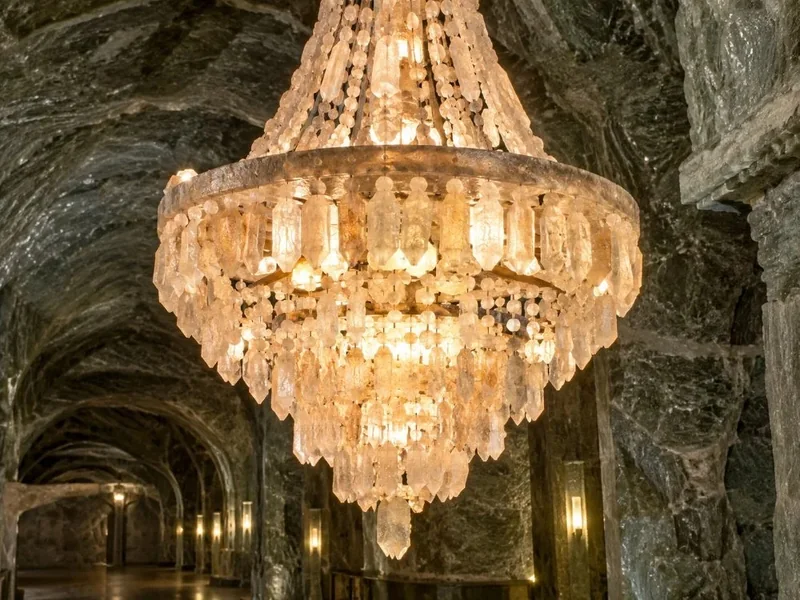
Yes, the Wieliczka Salt Mine is worth seeing. It was on the first UNESCO World Heritage List in 1978, and its highlight, St Kinga’s Chapel, is a hall about 54 m long carved entirely from rock salt 101 m underground, salt-crystal chandeliers included. The chapel is on the Tourist Route, a guided walk of two to three hours.
Is Wieliczka Salt Mine worth seeing?
Yes. It is a UNESCO World Heritage Site from the very first year of the list, and few places show centuries of work and craft so vividly.
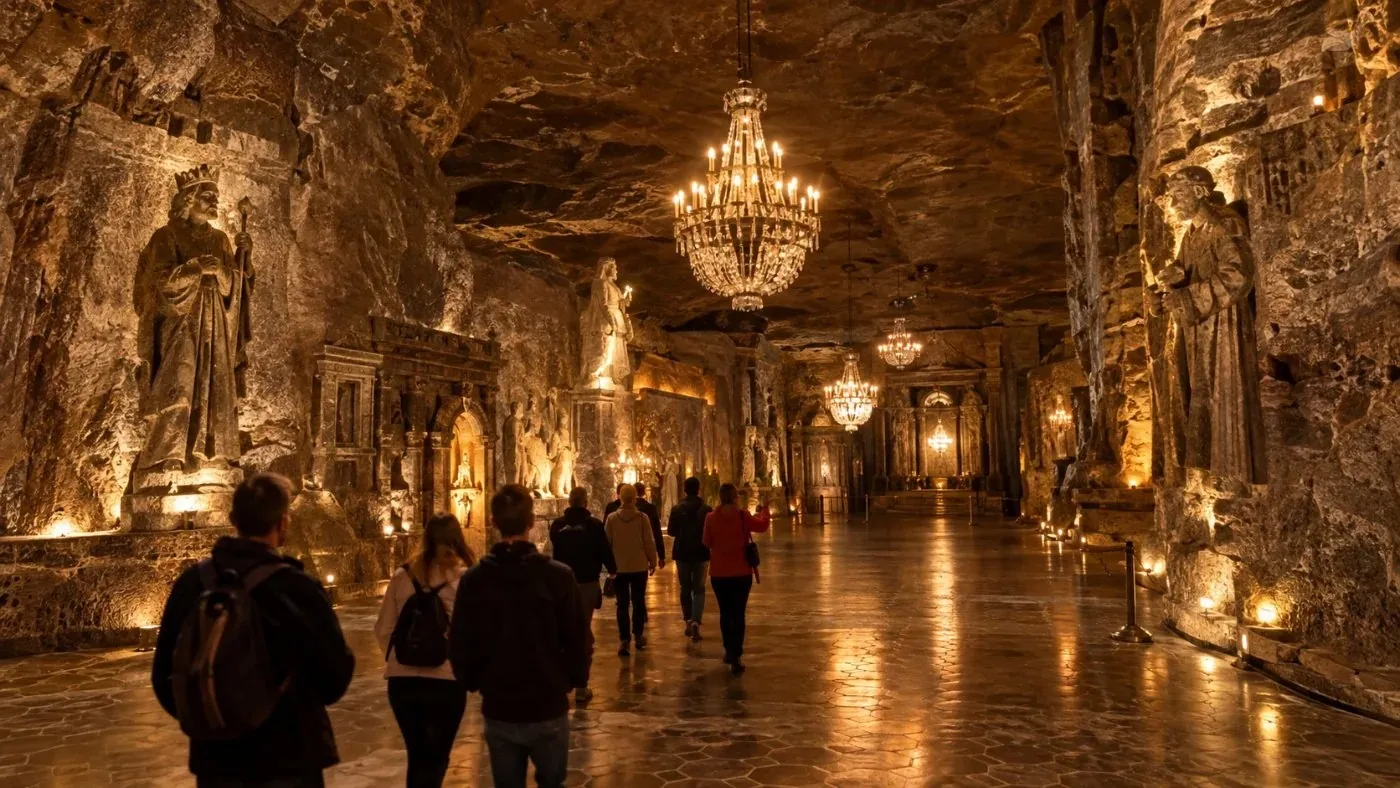
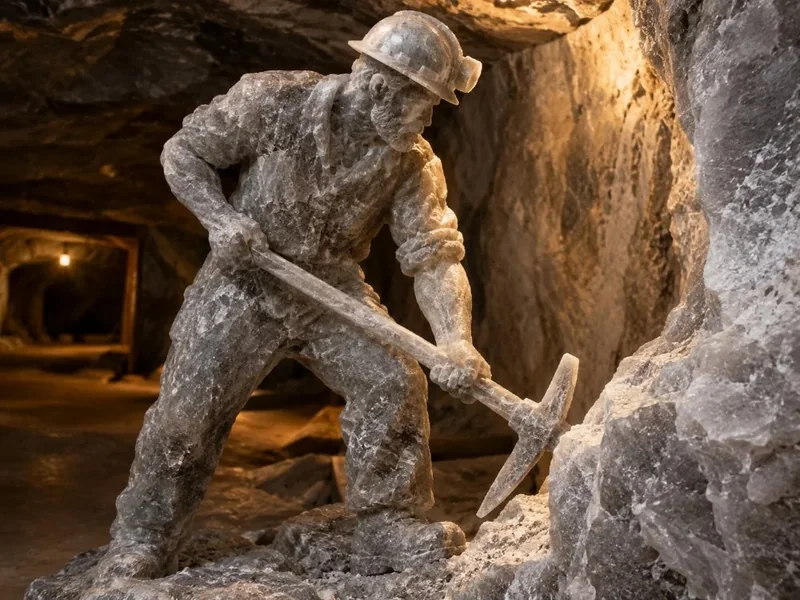
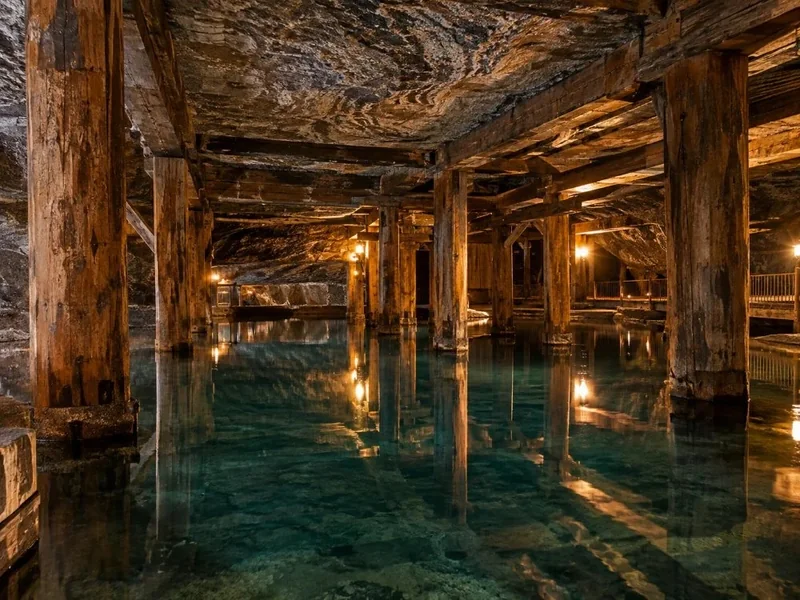
The mine is a monument both to industry and to art. The Tourist Route takes you through underground chambers and brine lakes, past mining tools and machinery, and among salt sculptures carved by miners and contemporary artists. Tour listings mention about 20 chambers on the route.
It is also easy to reach: about 15 km from Kraków’s centre, see how to get from Kraków to Wieliczka.
What is special about the Wieliczka Salt Mine?
Its scale and its age. The mine reaches 327 m below ground, with more than 287 km of passages on nine levels, and its first record dates from 1044.
Salt was mined here systematically from the 13th century until 1996, when commercial production ended. Over those centuries the miners left behind chambers, timber supports, lakes of brine and carvings in the salt itself.
The Tourist Route covers about 3.5 km and reaches 135 m below ground, a tiny fraction of the mine: less than one fiftieth of its passages. Even that fraction holds enough to fill two to three hours.
See the chapel with a fast-track entrance and a small group of up to 15 on the way from Kraków.
Book thisWhat is St Kinga’s Chapel?
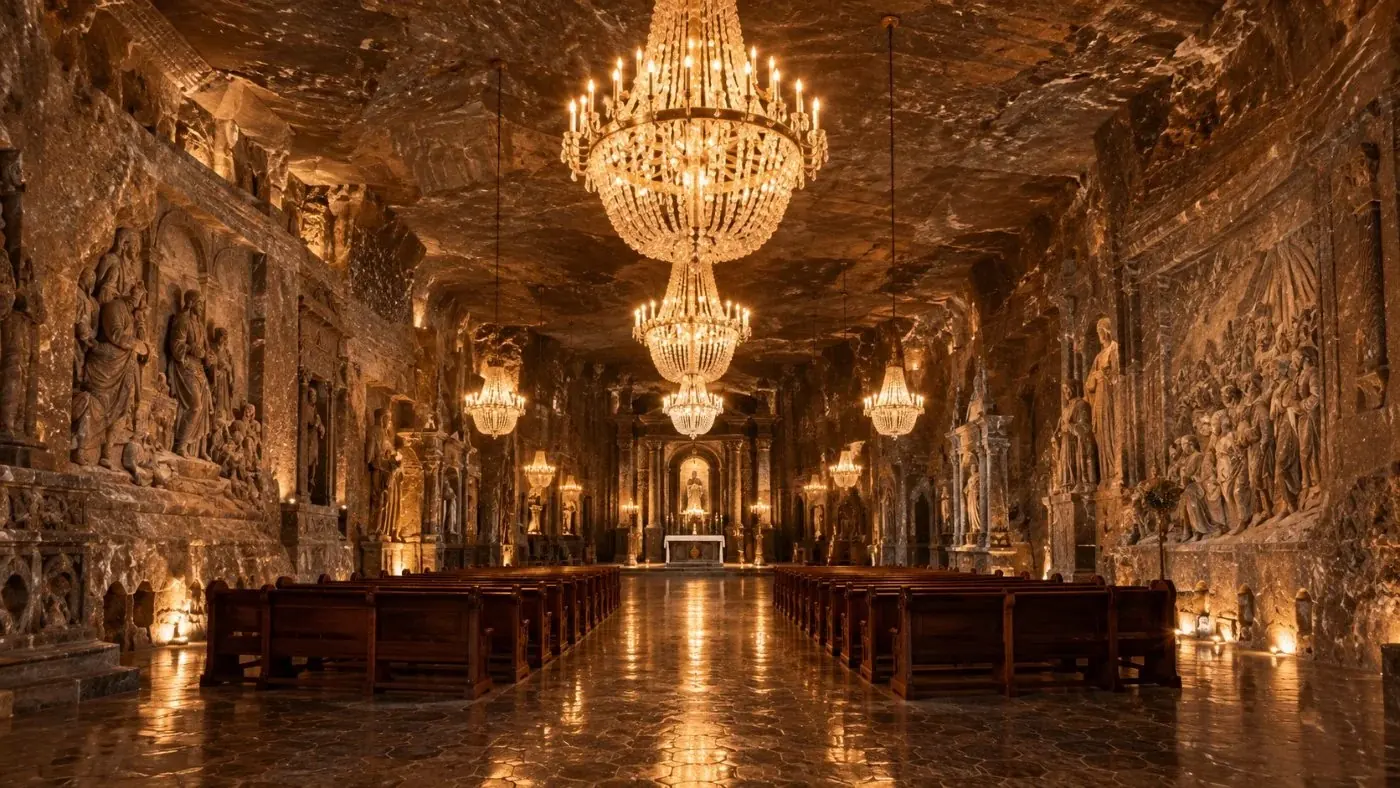
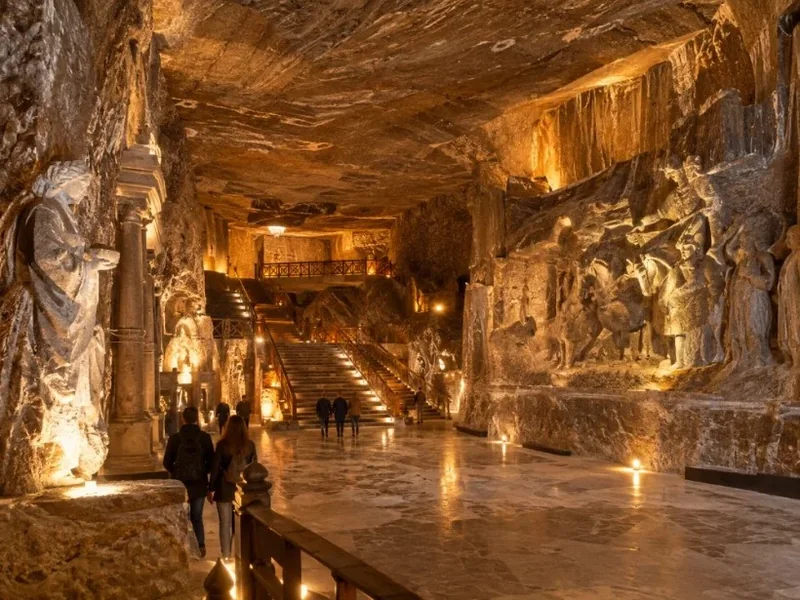
An underground church carved from rock salt, 101 m below the surface. It is about 54 m long, 18 m wide and 12 m high.
Everything in the chapel is made of rock salt, from the reliefs on the walls to the chandeliers, which are made of salt crystals. Standing in it, the scale is what surprises visitors first, followed by the detail of the carving.
The chapel is part of the Tourist Route, so you see it with the mine guide who leads your group.
Who carved St Kinga’s Chapel?
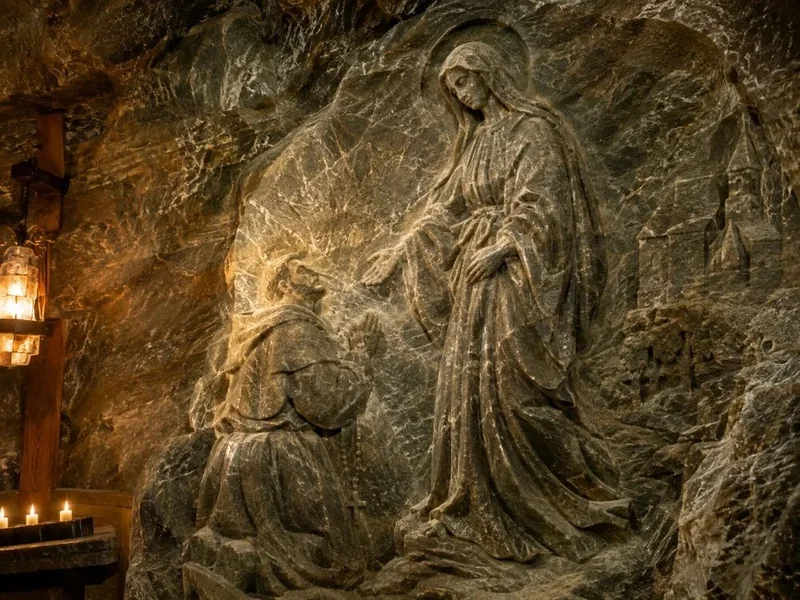
Mainly the brothers Józef and Tomasz Markowski and Antoni Wyrodek, who carved the Last Supper relief after Leonardo.
The reliefs on the chapel walls show religious scenes, and the Last Supper by Antoni Wyrodek is the one most visitors look for. The chapel also holds a salt statue of Pope John Paul II from 1999.
Elsewhere on the route there are more salt sculptures, some by miners and some by contemporary artists. To see how long to allow for all of it, read how long to spend at Wieliczka.
Is there Mass in St Kinga’s Chapel?
Yes. Holy Mass is held in the chapel on Sundays and at midnight on Christmas Eve.
The chapel is a working place of worship as well as a sight on the Tourist Route. The listings do not give Mass times, so check with the mine if you hope to attend.
On a normal tour you see the chapel as part of the guided walk. For the stairs down and the lift back up, read the guide to the steps and what to wear.
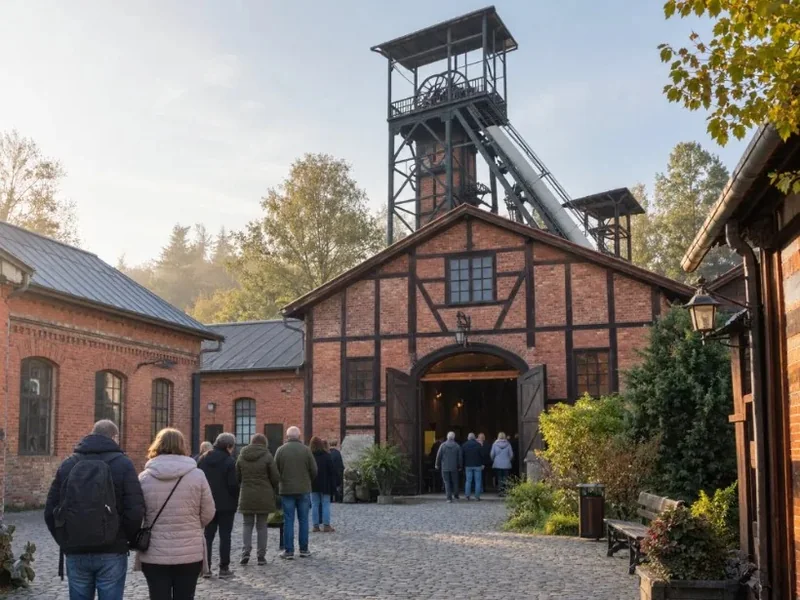
Fast-track entry and a guide met at the mine entrance, with an early-bird option and eight languages.
Book thisWhat is the legend of St Kinga’s ring?
According to legend, Kinga, a Hungarian princess, threw her ring into a salt mine in Hungary, and it turned up in the first lump of salt found at Wieliczka.
Kinga married the Polish prince Bolesław, and the legend links her to the discovery of salt in Poland: the ring she cast into a Hungarian mine reappeared in Wieliczka’s salt. It is a story rather than history, but a well-known one in Wieliczka.
The chapel, the best-known hall in the mine, is named after her. Ask your guide about the legend underground; it is part of the story the mine tells about itself.
What else will I see on the Tourist Route?
Brine lakes, chambers with timber supports, mining tools and machinery, and salt sculptures. Listings mention about 20 chambers.
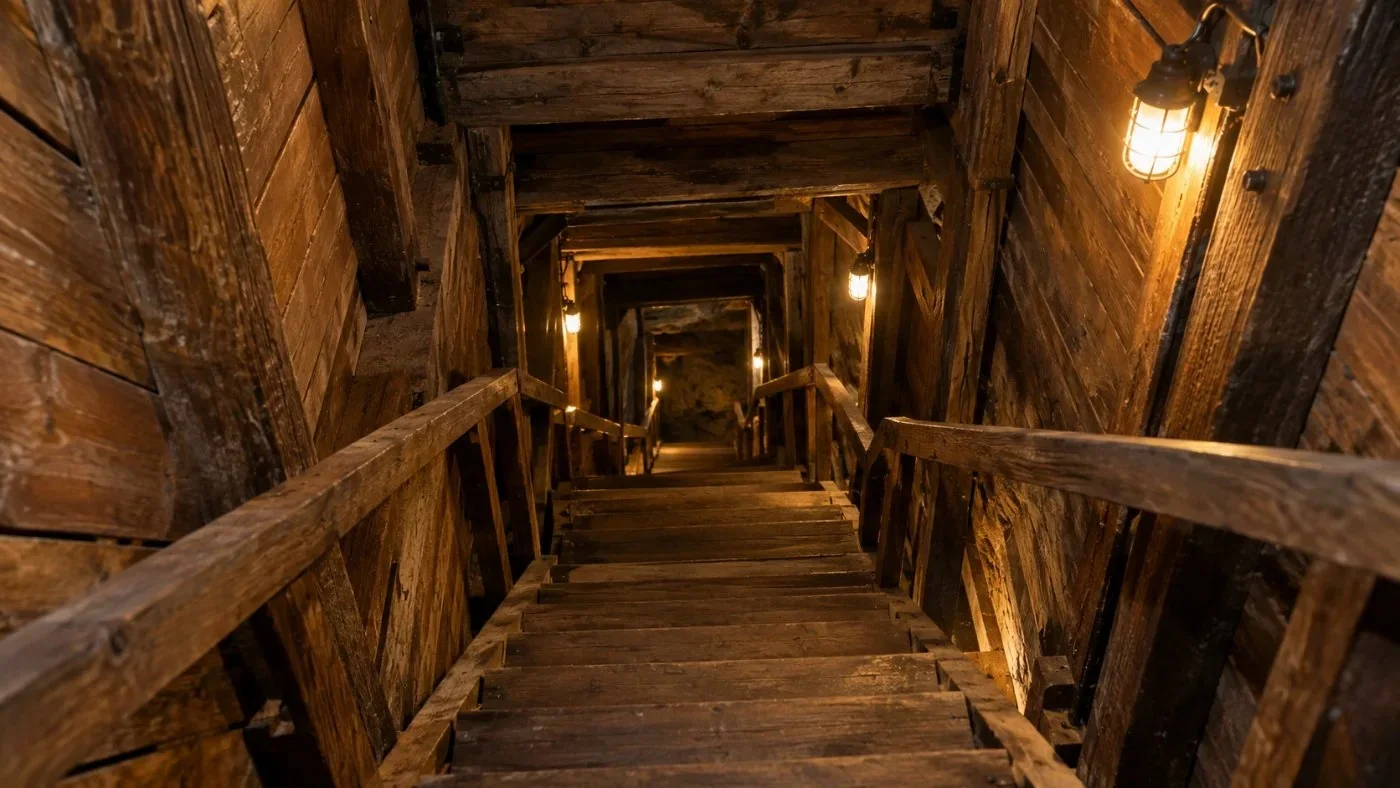
The route begins at the Daniłowicz Shaft with a descent on wooden stairs and ends with a ride up in a miners’ lift. Along the way you pass through chambers of very different sizes, beside underground lakes and through the underground exhibition of the Cracow Saltworks Museum.
Photography and filming are allowed, so bring a phone or camera. It is 17-18 °C on the route, so a light layer is enough, and comfortable shoes help on the 800 plus steps, most of them downhill. Only small bags of up to 20 x 20 x 35 cm go underground; larger items go to free storage.
How do I see St Kinga’s Chapel?
Book a Tourist Route visit. The chapel is on the route, and a mine guide leads each group through it.
The flagship fast-track tour offers pickup from Kraków, a meeting at the mine or a ticket-only option. The hotel-pickup tour collects you in a people carrier and includes a fast-track ticket. If you are already in Wieliczka, the fast-track ticket tour meets you at the entrance.
For a side-by-side view, read the guide to the best salt mine tour.

Door-to-door pickup, a driver who talks about Kraków and a fast-track entry to the chapel and the chambers.
Book thisFrequently asked questions
How deep is St Kinga’s Chapel?
It is 101 m below ground, and about 54 m long, 18 m wide and 12 m high.
Is everything in the chapel made of salt?
Yes. The reliefs, the statues and the chandeliers of salt crystals are all made of rock salt.
When did the mine become a UNESCO site?
In 1978, the very first year of the World Heritage List. Since 2013 it has been listed with Bochnia as the Wieliczka and Bochnia Royal Salt Mines.
Is the mine still producing salt?
Commercial salt production ended in 1996, after falling prices and flooding.
Ready to book
Choose your salt mine tour
Free cancellation up to 24 hours before on every option. Booked on GetYourGuide.
Salt Mine Tour & Fast-Track Ticket from Kraków
- Entry ticket with fast-track access to the Tourist Route
- A licensed guide underground (not on the ticket-only option)
- Two-way transfer from Kraków on the transport option; the partner confirms the pickup the day before
Fast-Track Ticket & Guided Tour at the Mine
Your own way to Wieliczka, then fast-track entry and a guided tour; options include an early-bird slot and a transfer from Kraków
Salt Mine Guided Tour with Hotel Pickup
- Hotel pickup and drop-off in a people carrier, with an English-speaking driver
- Fast-track entrance ticket and fees
- An official Salt Mine Museum guide, in groups of up to 30 underground